

Why Is Kota Kinabalu Called Jesselton? The History Behind Sabah’s Colonial-Era Capital
Kota Kinabalu is called Jesselton because the British North Borneo Company named its 1899 mainland settlement after Sir Charles Jessel, the company’s vice-chairman. The name stood until 22 December 1967, when the Sabah State Legislative Assembly renamed the city Kota Kinabalu after nearby Mount Kinabalu.
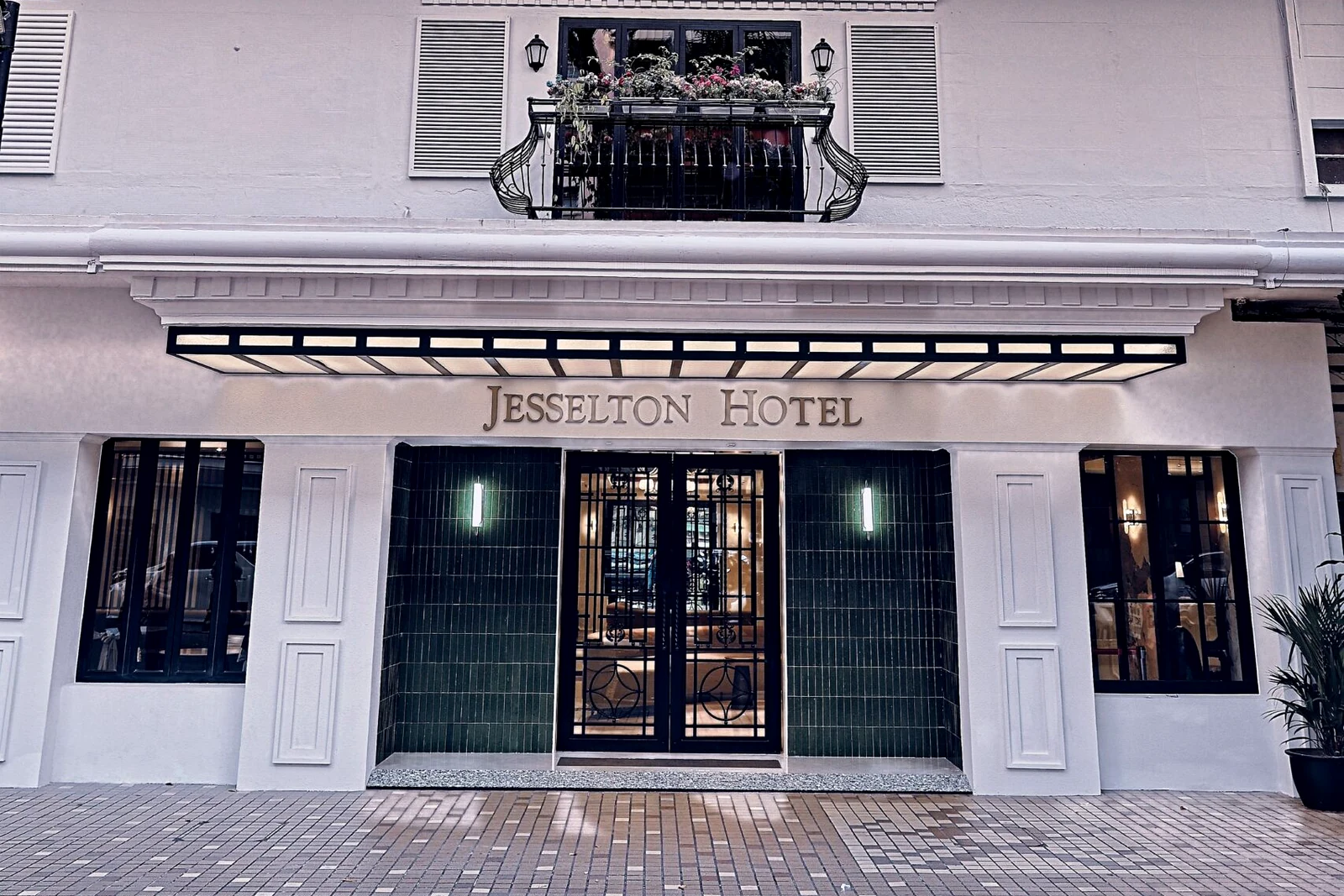
Walk down Gaya Street — the old Bond Street, the commercial spine of colonial Jesselton — and you are walking through the original street plan of a town that no longer carries its first British name. Yet the name Jesselton has never left the city. It survives in the sign at Jesselton Point, where boats still leave for Tunku Abdul Rahman Marine Park, and it lives most visibly at The Jesselton Hotel, the 1954 heritage landmark at 69 Jalan Gaya that still bears the colonial-era name.
For travellers who choose a heritage boutique stay on Gaya Street over a generic high-rise, the story of how Jesselton became Kota Kinabalu is not trivia. It explains why this district looks the way it does and why so few era buildings survive.
What Was the Original Name of Kota Kinabalu?
Before the British arrived, the area around present-day Kota Kinabalu was known to the Kadazandusun people as Dondoung, while coastal traders and fishermen used the Malay name Api-Api, a reference to the mangrove and cane thickets along the shore. In 1882, the British North Borneo Company (BNBC) established its first settlement in Gaya Bay, on Gaya Island itself, alongside the Bajau and Suluk communities already living there.
That first settlement lasted fifteen years. In 1897, the Bajau-Suluk chieftain Mat Salleh raided and burned it to the ground. The company briefly relocated its administration to Gantian Bay near Sepangar in 1898, but the site proved unsuitable. In July 1899, Land Commissioner Henry Walker identified a thirty-acre site on the mainland directly opposite Gaya Island, and by the end of that year the first shoplots, a pier and government buildings were under construction.
The new town first took the name Api-Api, echoing the earlier Malay name and the fire that had forced the move. It carried that name only briefly before the company chose a more durable one.
Who Was Sir Charles Jessel?
Jesselton was named after Sir Charles Jessel, vice-chairman of the British North Borneo Company, the chartered company that administered North Borneo as a British protectorate from 1881 until the Japanese occupation. Naming new settlements after company directors was standard practice for the BNBC, and Jessel — a senior figure in the company’s London directorate — received the honour in 1899, when the mainland town was formally established as the company’s new administrative centre.
There is a quiet irony in the choice: Sir Charles Jessel never once visited the town that carried his name. His great-grandson travelled to Sabah in 2011 and later published a book on the family connection, but the man himself knew Jesselton only through company reports and maps. The name he never saw in person would nonetheless define the city for nearly seven decades.
When Did Jesselton Become the Capital of North Borneo?
Jesselton grew quickly into North Borneo’s principal trading port, shipping rubber, rattan, honey and wax through its harbour and connecting inland production to world markets via the North Borneo Railway, established in 1896 to haul commodities from the interior to the coast. Shoplots rose along Bond Street — today’s Gaya Street — and the town accumulated the civic furniture of a colonial commercial centre: a customs house, banks, a community hall and a cinema.
Its elevation to capital, however, came from catastrophe rather than commerce. During the Second World War the town was devastated — first razed by the British during their 1942 retreat to deny resources to the advancing Japanese, then bombed again by Allied forces in 1945. The British North Borneo Company, near bankruptcy after the war, was unable to finance reconstruction and ceded North Borneo to the British Crown on 18 July 1946. The new colonial government chose to rebuild Jesselton as the capital of North Borneo in 1946, in place of Sandakan, which had suffered even greater destruction; nearly all the heritage streetscape visible in the city centre today dates from this rebuilding.
What Happened to Jesselton During World War II?
Under Japanese occupation the town’s name reverted briefly to Api, one that residents had never fully abandoned. The occupation years were marked by resistance, most famously the Jesselton Revolt of October 1943, when Albert Kwok and the Kinabalu Guerrillas briefly seized control of the town before the uprising was crushed with severe reprisals across the west coast.
The final destruction came in 1945, when Allied bombing levelled almost all of pre-war Jesselton. Only three civic structures survived, among them the Atkinson Clock Tower, built in 1905 without nails and still the oldest structure in the city. Residents rebuilt along Bond Street in the late 1940s, funded by the colonial government’s Reconstruction and Development Plan of 1948–1955. The Jesselton Hotel itself belongs to this second life of the city: it opened in 1954 as the first hotel of post-war Jesselton, and became the principal address for governors, administrators and visiting dignitaries — including, famously, Lady Edwina Mountbatten.
When and Why Was Jesselton Renamed Kota Kinabalu?
After North Borneo joined the Federation of Malaysia in 1963 and became the state of Sabah, the old colonial name stood for only four more years. On 22 December 1967, the State Legislative Assembly under Chief Minister Tun Mustapha bin Datu Harun passed a bill renaming Jesselton as Kota Kinabalu. The new name was thoroughly local: Kota is the Malay word for a city or fort, and Kinabalu honours the great mountain that rises east of the city — the peak that had given the district its earlier indigenous names.
The renaming was part of the wider post-independence effort to shed colonial toponyms across Malaysia, yet it was carried out without erasure. The city kept Jesselton’s street grid, its rebuilding-era architecture and its role as state capital. Jesselton was granted city status on 2 February 2000, by then under its Malaysian name, and today the two names coexist comfortably — one marking the historical record, the other the living city.
| Year | Event | Name in Use |
|---|---|---|
| 1882 | British North Borneo Company settles on Gaya Island, beside Bajau and Suluk communities | Api-Api / Gaya |
| 1897 | Mat Salleh’s raid burns the island settlement; administration moves to Gantian Bay | Api-Api |
| 1899 | Mainland town founded opposite Gaya Island and named after company vice-chairman Sir Charles Jessel | Jesselton |
| 1942–1945 | Town razed in the British retreat, then levelled by Allied bombing; Japanese occupation reverts the name | Api |
| 18 July 1946 | North Borneo becomes a British Crown colony; Jesselton replaces Sandakan as capital | Jesselton |
| 1954 | The Jesselton Hotel opens on Gaya Street, the first hotel of post-war Jesselton | Jesselton |
| 22 December 1967 | Sabah State Legislative Assembly renames the capital Kota Kinabalu | Kota Kinabalu |
| 2 February 2000 | Kota Kinabalu is granted city status | Kota Kinabalu |
Where Can You Still See Old Jesselton Today?
Remarkably for a city twice destroyed, the traces of Jesselton are walkable within a single afternoon. From the front door of The Jesselton Hotel at 69 Jalan Gaya, the surviving heritage landmarks of old Jesselton sit within a short stroll, as our guide to Kota Kinabalu’s top heritage sites lays out step by step. The Atkinson Clock Tower of 1905 watches over the city from its ridge; the 1918 Sabah Tourism Board building — the former General Post Office — still holds its classical colonial facade on Gaya Street; and Jesselton Point, the old harbour, dispatches ferries to the marine park as it has dispatched boats for over a century.
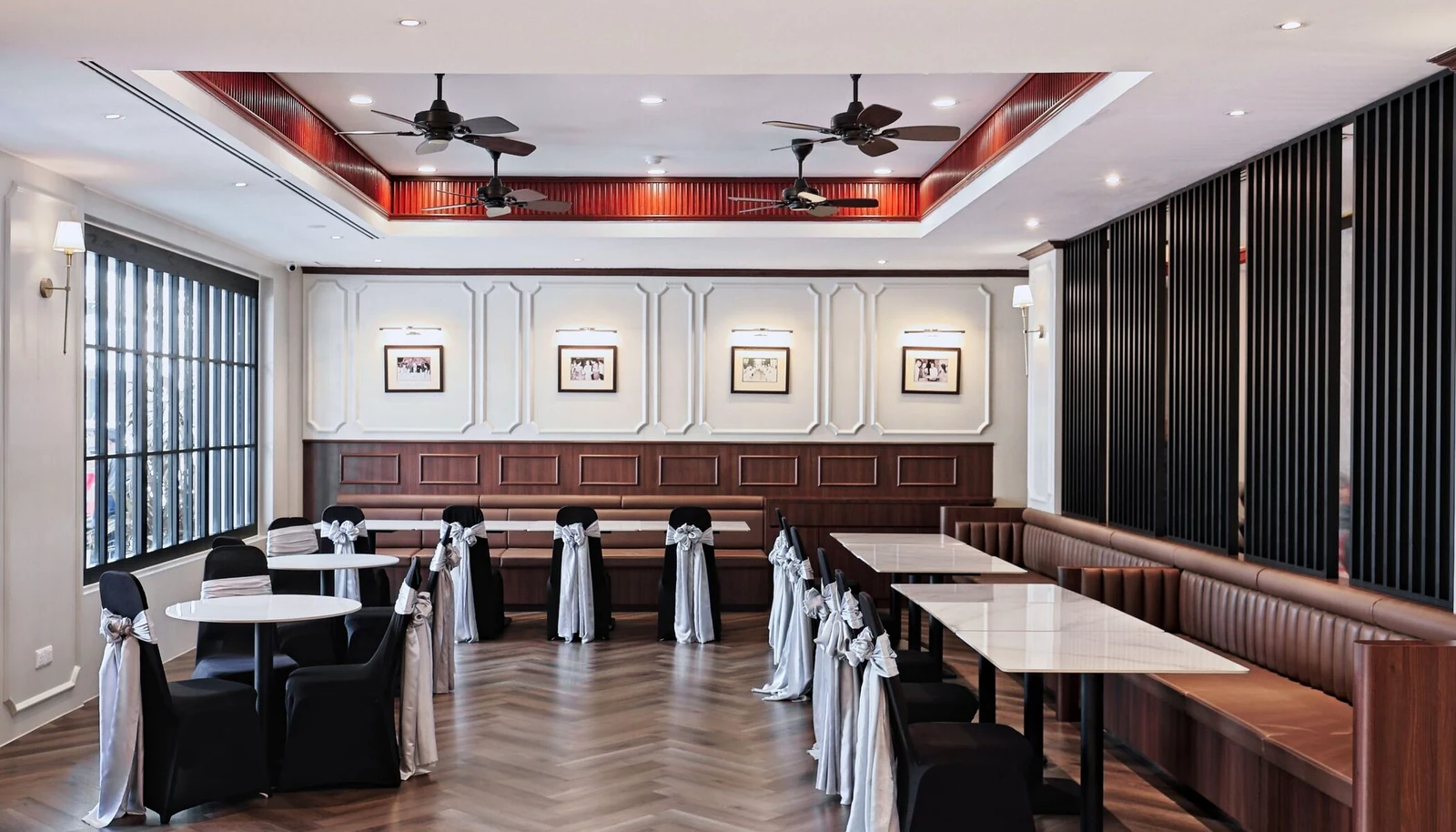
Staying at The Jesselton Hotel places you inside the story rather than merely beside it. As our detailed overview of The Jesselton Hotel explains, the hotel opened in 1954 as the city’s first post-war hotel, built with the fine timber and brass detailing of the reconstruction era, and it remains one of the few places where the name Jesselton is still spoken daily. Guests can compare the rooms and suites on Gaya Street, take afternoon tea in the Mountbatten Lounge, or browse fresh sourdough at the Artisan Bakery — all within the 1950s streetscape that replaced the ruined town.
Plan your own walk through surviving Jesselton: every stop below begins and ends at 69 Jalan Gaya.
Stop 1 — The Jesselton Hotel Heritage Lobby and Mountbatten Lounge (1954)
You are already standing in it. The hotel’s brass signage, timber millwork and framed archival photographs of colonial Jesselton are the most complete expression of the rebuilding era in the city — and the Mountbatten Lounge, named for Lady Edwina Mountbatten’s stay, is the room where the era’s dignitaries once gathered.
Stop 2 — Sabah Tourism Board Building, the Old General Post Office (1918)
A two-minute walk up Jalan Gaya. This classical colonial building with its dome and columns served as Jesselton’s post office and is one of the precious few structures that pre-dates the Second World War.
Stop 3 — Atkinson Clock Tower (1905)
About eight minutes’ walk uphill from Gaya Street. Built in memory of the first District Officer and constructed without a single nail, the tower is the oldest standing structure in Kota Kinabalu and survived every bombardment of the war.
Stop 4 — Jesselton Point Ferry Terminal
Ten minutes on foot, at the site of the old harbour. The brass “Jesselton Point” lettering still dispatches boats to Tunku Abdul Rahman Marine Park today, exactly as the colonial-era pier did more than a century ago.
The Jesselton Hotel on the Map
Frequently Asked Questions
Why is Kota Kinabalu called Jesselton?
Kota Kinabalu was called Jesselton from 1899 until 1967 because the British North Borneo Company named its new mainland settlement after Sir Charles Jessel, the company’s vice-chairman. The name was changed to Kota Kinabalu by the Sabah State Legislative Assembly on 22 December 1967.
Did Sir Charles Jessel ever visit Kota Kinabalu?
No. Sir Charles Jessel, the British North Borneo Company vice-chairman after whom Jesselton was named in 1899, never visited the town. His great-grandson travelled to Sabah in 2011 and later wrote a book about the family connection to the city.
When did Jesselton officially become Kota Kinabalu?
Jesselton was officially renamed Kota Kinabalu on 22 December 1967, when the Sabah State Legislative Assembly under Chief Minister Tun Mustapha passed the renaming bill. Kota is the Malay word for city or fort, and Kinabalu refers to Mount Kinabalu east of the city.
What survived the 1945 bombing of Jesselton?
Only three civic structures survived the Allied bombing of Jesselton in 1945, including the 1905 Atkinson Clock Tower, the oldest standing structure in Kota Kinabalu. Most of the present city centre, including Gaya Street’s permanent shoplots and The Jesselton Hotel (1954), dates from the post-war reconstruction.
Where can you still see the name Jesselton in Kota Kinabalu?
The name Jesselton survives at Jesselton Point Ferry Terminal, the departure point for boats to Tunku Abdul Rahman Marine Park, and at The Jesselton Hotel, the 1954 heritage boutique hotel at 69 Jalan Gaya in the city centre.
Stay at the Address That Kept the Name
The Jesselton Hotel has carried the name in brass at 69 Jalan Gaya since 1954 — through the renaming of the city around it. Book direct to sleep inside the story of old Jesselton, steps from every heritage stop on this walk.

Awards


